
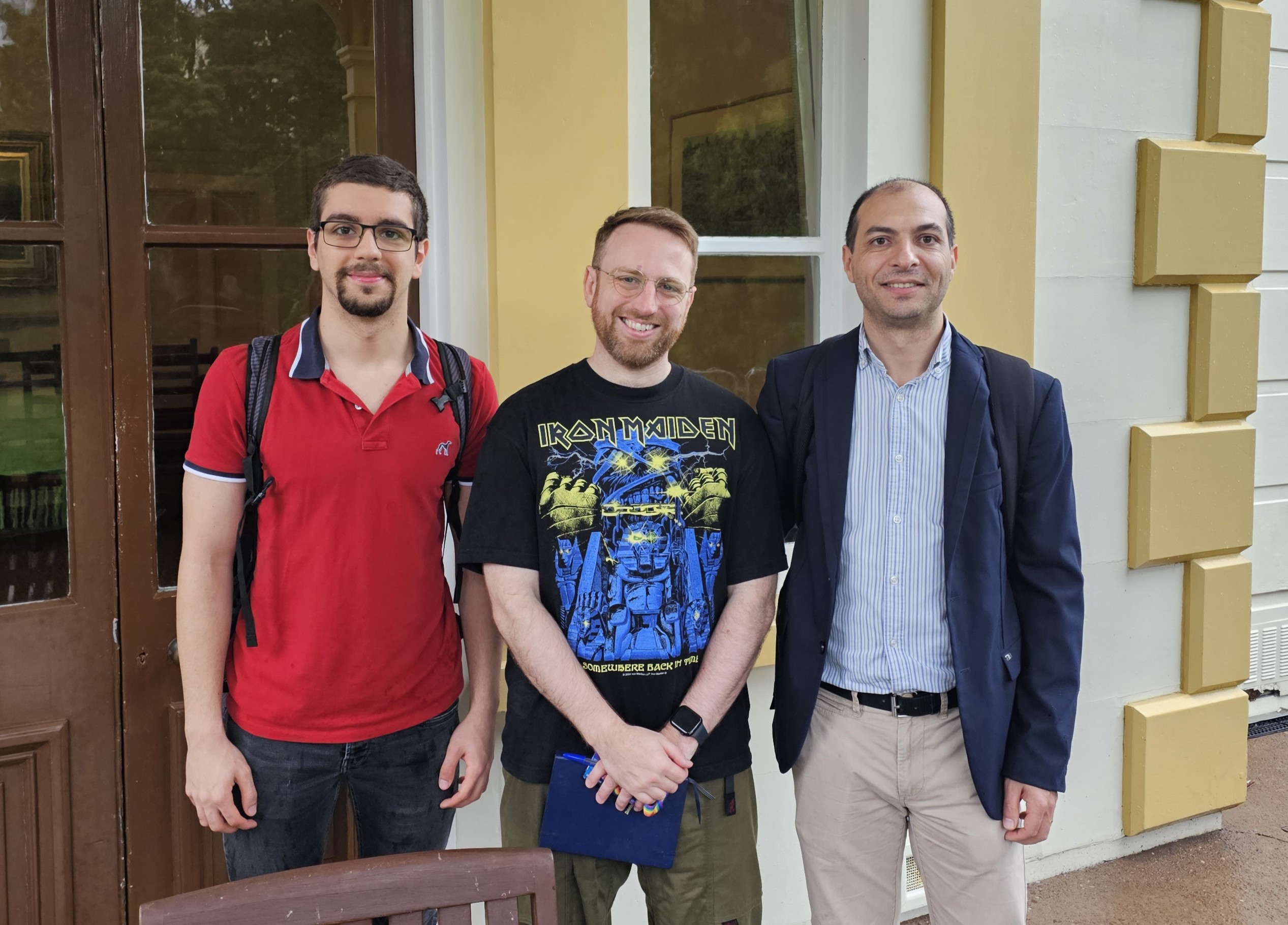
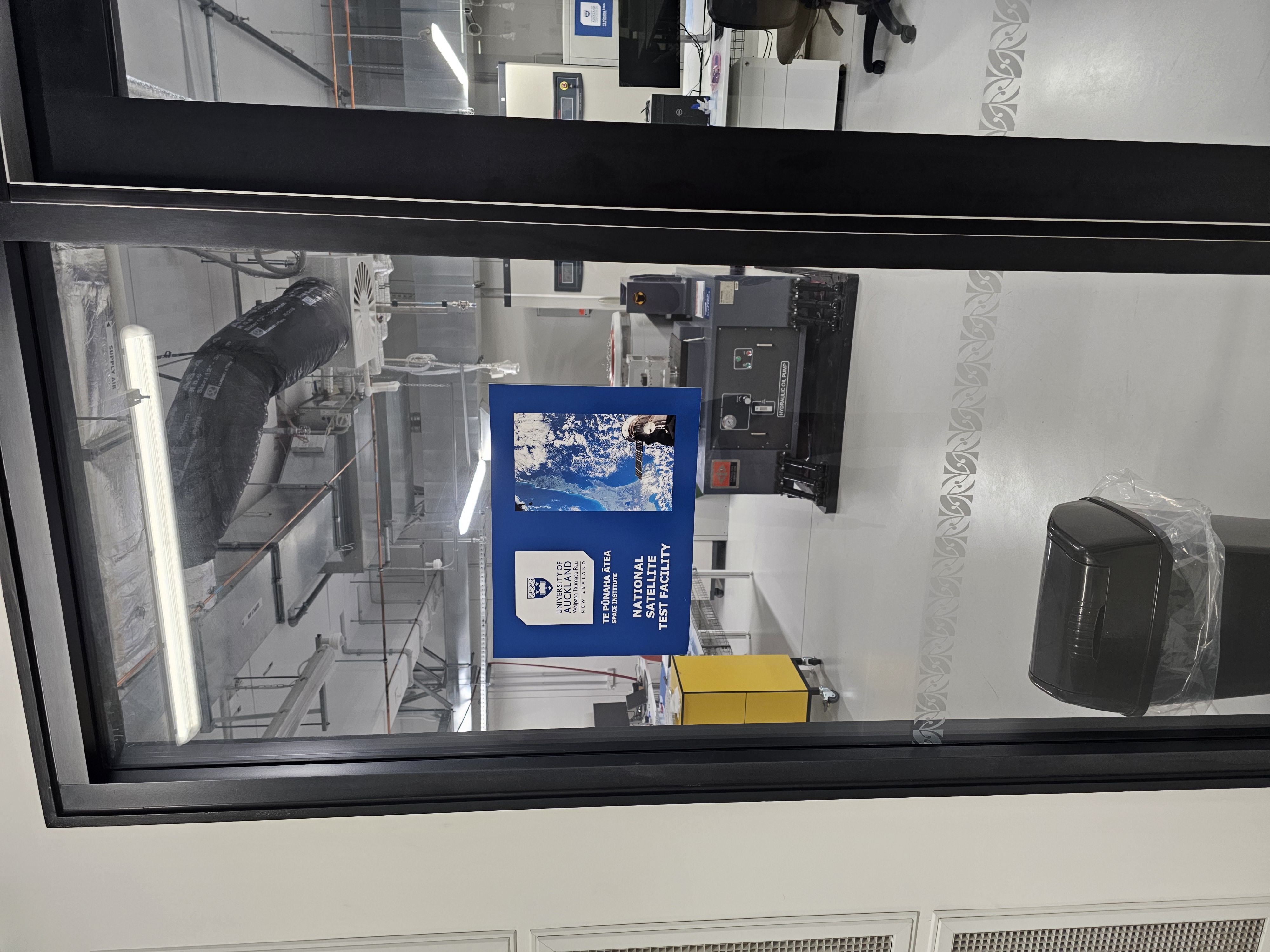
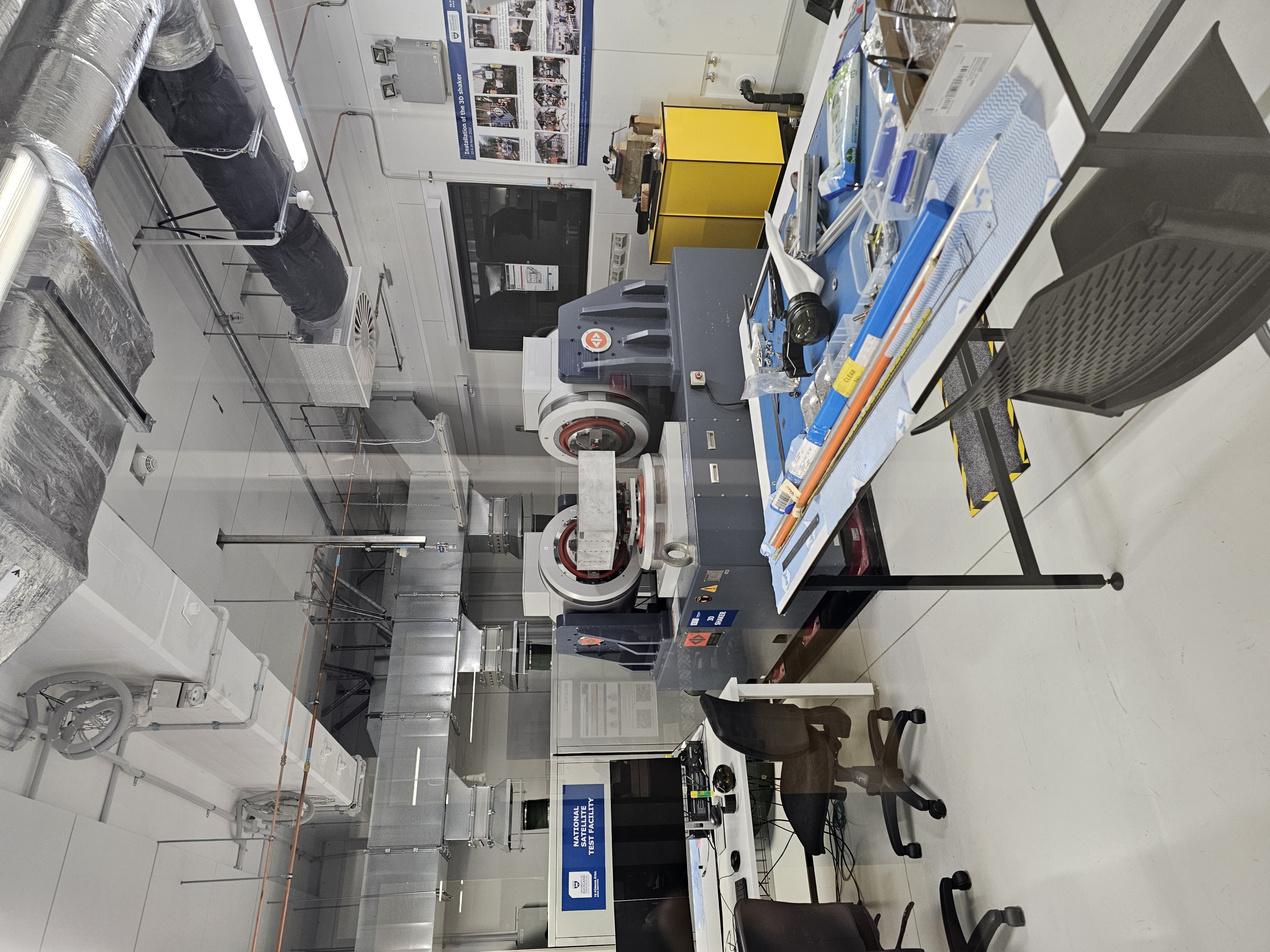
The AIGODS delegation has today completed Mission 1 at Te Pūnaha Ātea, the Space Institute of the University of Auckland, in a visit hosted by Thomas Dowling. The mission marked an important step in the project’s international outreach, placing the team in direct contact with a research environment where Earth Observation, geospatial science, mission development, payload operations, and downstream data use are developed as parts of the same applied framework. For AIGODS, this was especially relevant, as the project itself depends on transforming observation data into operationally useful outputs for monitoring, interpretation, and decision support in viticulture.
The visit also benefited from the strong alignment between the project’s technical scope and Thomas Dowling’s own research profile, which spans remote sensing, photogrammetry, agriculture and land management, forestry fire management, and earth and space science informatics. This made the exchange particularly valuable, not only from a scientific perspective but also in terms of practical relevance, since the discussions connected geospatial observation with real environmental and agricultural applications in a strongly operational context.
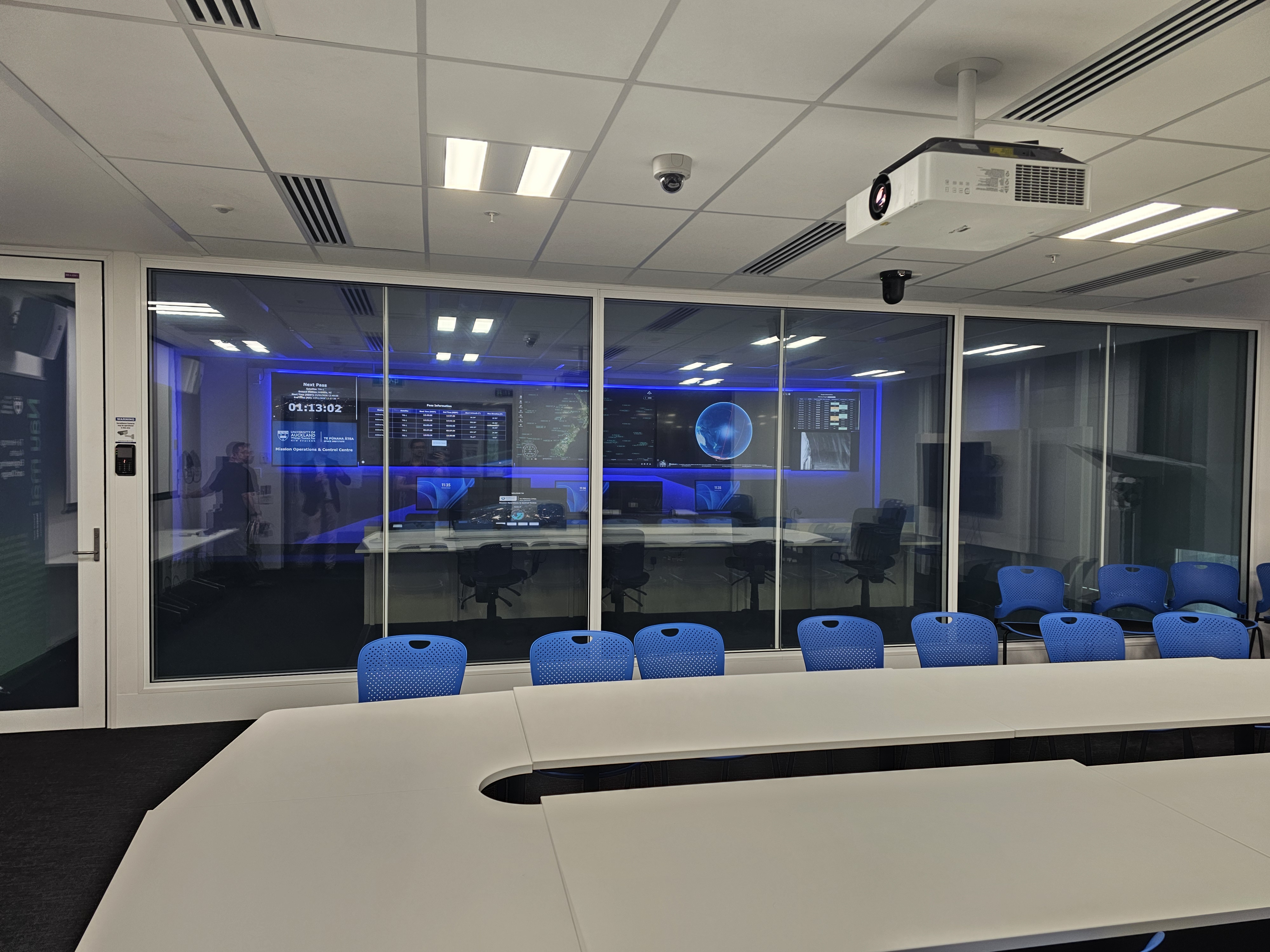
One of the main highlights of the mission was the inspection of the Mission Operations Control Centre (MOCC), which offered the delegation direct exposure to a live operational chain linking mission planning, spacecraft operations, data reception, hosting, and information delivery. The visit gained additional significance through discussion of the recent TPA-1 mission, a technology demonstrator used to validate in-house processes and infrastructure for mission development, delivery, and operations. Because TPA-1 also includes Earth Observation cameras, it provided a particularly meaningful point of contact with the AIGODS perspective on spatial monitoring and data exploitation.
The technical exchange extended well beyond institutional presentation. Discussions addressed the progress already made in vineyard mapping in Portugal, the availability of aerial data in both countries, current work in yield estimation, and the possible extension of monitoring workflows to smoke plume tracking and related mitigation measures. The meeting also opened space to consider possible future collaboration under Horizon Europe, including opportunities that may connect with the continuation of this research through Diogo Santos Costa’s doctoral pathway. In that sense, the mission was not simply observational, but part of a wider effort to position AIGODS within an international network of expertise in agricultural monitoring, environmental intelligence, and geospatial innovation.
As Diogo Santos Costa noted,
“What made this visit especially valuable was the chance to see Earth Observation not only as a data source, but as a complete operational chain linking sensing, infrastructure, validation, and downstream use. That perspective is highly relevant to AIGODS as we continue to strengthen the connection between geospatial intelligence and practical support for viticulture.”
This broader perspective is precisely what Mission 1 contributed to the project: a stronger understanding of how sensing systems, technical infrastructure, and applied data use can be brought together in ways that are both scientifically robust and institutionally meaningful.
Login Required
Loading login form...